
Hold at the Blue Mooring
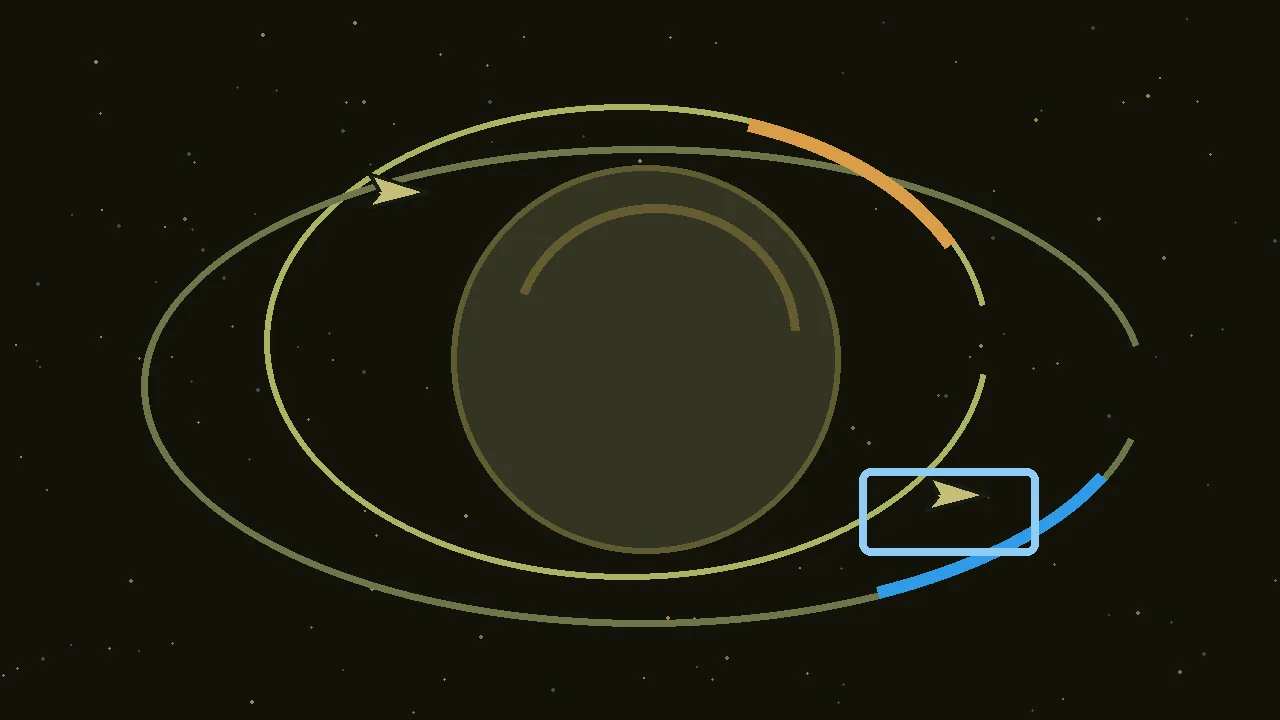
An intermediate position has its own window
A fleet reaches the mooring before it can use the next curve. A second group will arrive after a short interval. Both have a route that could put them at the mooring while the first group still needs it. The arrangement gives the player an opening, a holding place and one visible stop for the later group. The fleet can wait in the marked blue position or follow the longer curve. A result will show what the other group can still reach when it inherits the lane. The rules describe an invented station and simple turn counts.
Try a hold and read who can use the passage
Put the first group at the mooring. It can remain there until the next window shows. The second group takes an earlier curve and needs another place to hold while it approaches. Keeping the first location open is also possible while the first group follows a different route. The game lets a player restore the earlier trial and preserve a still of the late state. Look for the first visible difference after each choice and what it leaves for the other fleet. A wait can be useful for the first ship and only move the next group’s problem into the following turn. The two drawings show which place each group can actually reach.
Keep the edge of the mooring visible
The art gives the stop a thin outline and a dark strip inside it. A blue mark holds the current group in a shape a reader can identify if the rest of the station moves. Amber shows other available windows. Olive defines the older position while the nearer route comes in. Read An Open Place to Wait for one design that shows an open holding spot without making it look like a transit. We want the still to identify whether a fleet can already go forward or still needs to wait. Put the earlier position at the same spot when the next fleet reaches the larger map.
End because the holding choice changed a later action
At the test stop, one fleet can use the next window or both groups still have to wait. Look at the current mark beside the older one. Keep an Earlier Transit Era describes how the case preserves the old route when the next time label appears. This is an early concept in tabletop design. A reader should be able to name the group whose turn changed and a move it can now make. Keep the old holding position visible in each preview. The next pass can compare a new starting point without moving the same station or replacing one of the original ships. Give the result one useful thing the next fleet can still do and one earlier place it can remember.
The chart calls this middle position a mooring because it names where the fleet waits, and the window comes from the model’s later turn. Our current version tests that distinction before another lane appears.